



Contents
- Introduction
- Who Can Use Ozempic for Weight Loss?
- How Does Ozempic Help in Weight Loss?
- What Should You Expect in Terms of Weight Loss?
- How Does Ozempic Interact with Diabetes Treatment?
- Costs and Insurance Considerations
- Practical Considerations for Using Ozempic for Weight Loss
- Conclusion
Introduction
Ozempic, also known by its generic name semaglutide, is a medication originally developed to manage type 2 diabetes. It belongs to a class of drugs known as GLP-1 receptor agonists. These medications work by mimicking the action of the glucagon-like peptide-1 (GLP-1) hormone, which plays a crucial role in blood sugar regulation and appetite control. GLP-1 receptor agonists like Ozempic help increase insulin secretion, decrease glucagon levels, and slow gastric emptying, leading to better blood sugar control. Recently, Ozempic has gained attention for its significant benefits in weight loss, making it a valuable option for individuals struggling with obesity, especially those considering an Ozempic injection in Dubai.Who Can Use Ozempic for Weight Loss?
Ozempic is primarily prescribed for individuals with type 2 diabetes to help manage blood sugar levels. However, it has also been approved for weight loss in individuals who meet certain criteria. Typically, it is recommended for adults with a body mass index (BMI) of 30 or higher, or for those with a BMI of 27 or higher who also have weight-related health conditions such as hypertension, dyslipidemia, or type 2 diabetes.
It’s important to note that Ozempic is not intended for use in individuals with type 1 diabetes, pancreatitis, or a personal or family history of medullary thyroid carcinoma or multiple endocrine neoplasia syndrome type 2.
It is important to use GLP-1 drugs like Ozempic, under the guidance of a physician. If you are looking for solutions to chronic obesity, get in touch with the Zone.Health team today, or find out about Zone.Health’s medicated weight loss programs.
How Does Ozempic Help in Weight Loss?
Is Ozempic Effective for Weight Loss?
Research Findings
Numerous studies have demonstrated the efficacy of Ozempic in promoting weight loss. One notable study, the STEP (Semaglutide Treatment Effect in People with Obesity) clinical trial program, involved over 4,500 participants and found that those treated with semaglutide experienced significant weight loss compared to those receiving a placebo.
In the STEP 1 trial, participants who received Ozempic lost an average of 14.9% of their body weight over 68 weeks, compared to 2.4% in the placebo group. These results highlight Ozempic’s potential as a powerful weight loss tool, particularly for individuals struggling with obesity and related health conditions.
Weight Loss Outcomes
The weight loss outcomes with Ozempic can vary based on individual factors such as baseline weight, diet, physical activity, and adherence to the medication. On average, individuals using Ozempic for weight loss can expect to lose between 5% to 15% of their initial body weight over a period of several months. It’s important to approach weight loss with realistic expectations and to combine medication with lifestyle modifications for optimal results.
Impact on Diabetes Management
For individuals with type 2 diabetes, Ozempic offers the dual benefit of weight loss and improved blood sugar control. By promoting weight loss, Ozempic can enhance insulin sensitivity, reduce insulin resistance, and lower HbA1c levels. This dual action helps individuals manage their diabetes more effectively, reducing the need for additional medications and decreasing the risk of diabetes-related complications.
Ozempic alone vs Ozempic with Zone.Health
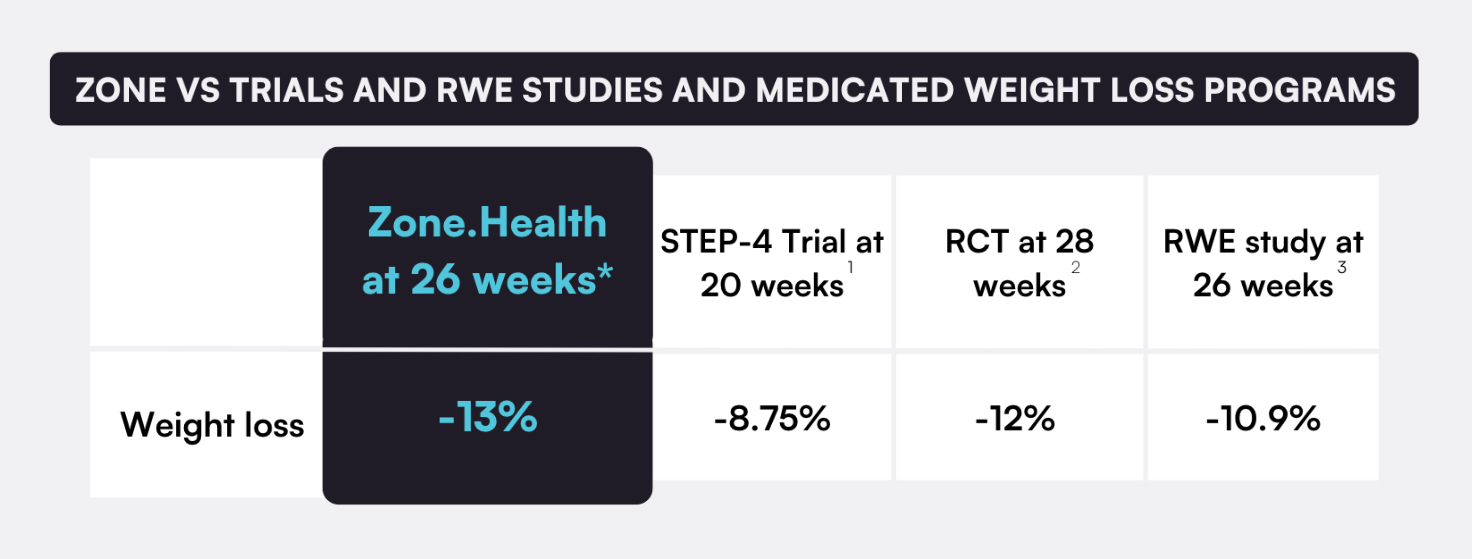
A conducted research published in 2024 has shown that GluCare.Health and Zone.Health’s hybrid model approach to treating patients led to better outcomes when using GLP-1 assisted diabetes and weight loss programs.
The treatment model utilizes continuous engagement by an integrated care team and using digital tools that are aimed at intensive, continuous behavioral changes in patients.
References:
*Zone.Health. (2024). The Metabolic Approach to Sustainable Weight Loss. https://zone.health/weightloss/wp-content/uploads/sites/2/2024/03/report-2024.pdf
Rubino D et al, Effect of continued weekly subcutaneous semaglutide vs placebo on weight loss maintenance in adults with overweight or obesity: the STEP 4 randomized clinical trial. Jama. (2021)
Wilding JP et al, Once-weekly semaglutide in adults with overweight or obesity. New England Journal of Medicine. (2021).
Ghusn W, De la Rosa A, Sacoto D, Cifuentes L, Campos A, Feris F, Hurtado MD, Acosta A. Weight loss outcomes associated with semaglutide treatment for patients with overweight or obesity. JAMA Network Open. 2022 Sep 1;5(9):e2231982-.
For the six-month hybrid medicated obesity program at Zone.health, a comprehensive approach that combines medications and multidimensional, hyper-personalized lifestyle modifications was applied. This included the integration of applications, an accountable coach, food logging, personal dietary plans, continuous glucose monitoring (CGM), and personalized guidance from a personal trainer. Zone.Health’s tailored program targets individuals with a BMI of 27 or higher, utilizing prescribed weekly semaglutide. Zone.Health’s commitment to holistic care is reflected in the promising 13% weight loss observed in participants over six months, more than the average seen amongst providers in Dubai and globally.
When using Ozempic, or any other GLP-1 medication prescribed to you, ask your physician what their muscle mass retention to loss is. Most providers will not be measuring this critical metric. When enrolled in the Zone.Health program, body composition analysis is an important component of the follow up improvement data which helps make the program more effective and personalized for maximum benefit.
What Should You Expect in Terms of Weight Loss?
Average Weight Loss Results
As mentioned earlier, clinical trials have shown that Ozempic can lead to substantial weight loss. On average, individuals can expect to lose approximately 5% to 15% of their initial body weight over the course of treatment. Some may experience more significant weight loss, while others may see more modest results. It’s essential to work closely with a healthcare provider to set realistic weight loss goals and monitor progress.
Duration of Treatment
The duration of Ozempic treatment for weight loss can vary based on individual needs and goals. In clinical trials, participants typically used Ozempic for 68 weeks (about 16 months) to achieve significant weight loss. However, some individuals may require longer-term use to maintain weight loss and continue managing their diabetes effectively. It’s crucial to follow your healthcare provider’s recommendations regarding the duration of treatment and to make lifestyle changes to support long-term weight management.
How Does Ozempic Interact with Diabetes Treatment?
Benefits for Type 2 Diabetes Patients
Ozempic offers several benefits for individuals with type 2 diabetes. By mimicking the GLP-1 hormone, it helps regulate blood sugar levels, promoting insulin secretion and reducing glucagon release. This dual action helps lower blood sugar levels after meals and improves overall glycemic control.
Managing Blood Sugar Levels
One of the key benefits of Ozempic is its ability to stabilize blood sugar levels throughout the day. By slowing gastric emptying, it helps prevent rapid spikes in blood sugar after meals. This steadier blood sugar control can reduce the need for additional diabetes medications and lower the risk of hypoglycemia.
Understanding Normal Glucose Range and PPBS Normal Range
Maintaining blood sugar levels within the normal range is crucial for managing diabetes and preventing complications. For individuals without diabetes, the normal fasting blood glucose range is typically between 70-100 mg/dL. After meals, known as postprandial blood sugar (PPBS), normal levels are generally below 140 mg/dL. For those with diabetes, the target ranges may be slightly higher, with fasting blood glucose levels typically aiming for 80-130 mg/dL and PPBS levels below 180 mg/dL.
Costs and Insurance Considerations
Price of Ozempic in Dubai
The cost of Ozempic can vary depending on factors such as dosage, location, and insurance coverage. Get in touch with the team at Zone.Health to find out more.
Practical Considerations for Using Ozempic for Weight Loss
Eligibility and Safety Considerations
Before starting Ozempic for weight loss, it’s important to determine if you are a suitable candidate for the medication. Eligibility criteria typically include a BMI of 30 or higher, or a BMI of 27 or higher with weight-related health conditions such as hypertension, dyslipidemia, or type 2 diabetes. Ozempic is not recommended for individuals with type 1 diabetes, pancreatitis, or a personal or family history of medullary thyroid carcinoma or multiple endocrine neoplasia syndrome type 2.
Dosage and Injection Instructions
Ozempic is administered once weekly via a subcutaneous injection. The starting dose is usually 0.25 mg per week for the first four weeks to minimize gastrointestinal side effects. After this initial period, the dose is typically increased to 0.5 mg per week. If additional glycemic control or weight loss is needed, the dose can be further increased to 1 mg per week.
Frequency of Administration
The convenience of once-weekly administration makes Ozempic a practical option for many individuals. It’s important to follow the prescribed dosing schedule and not to skip doses. If a dose is missed, it should be administered as soon as possible, within five days of the missed dose. If more than five days have passed, the missed dose should be skipped, and the regular dosing schedule should be resumed.
Consulting Healthcare Providers
Before starting Ozempic, it’s crucial to consult with a healthcare provider to discuss your weight loss goals, medical history, and any potential contraindications. Regular follow-up appointments are essential to monitor progress, adjust the dosage if necessary, and address any side effects or concerns. Your care team at Zone.Health can provide personalized guidance and support to ensure the safe and effective use of Ozempic for weight loss.
Conclusion
Ozempic offers a promising option for individuals seeking to achieve significant weight loss while managing type 2 diabetes. By mimicking the action of the GLP-1 hormone, Ozempic helps regulate blood sugar levels, reduce appetite, and promote weight loss. Clinical trials have demonstrated its effectiveness, with many individuals experiencing substantial weight loss over several months of treatment.
Consulting with a healthcare provider is essential to determine eligibility, receive proper dosing instructions, and monitor progress.
Incorporating Ozempic along with Zone.Health’s holistic, hybrid care plan ensures the right monitoring of your health metrics, gives you access to the medication with no issues of shortages or delays, provides you with a comprehensive care team and allows for you to stay in touch with your care-team 24/7. The Zone.Health weight loss programs ensure that your results are optimal and long term.